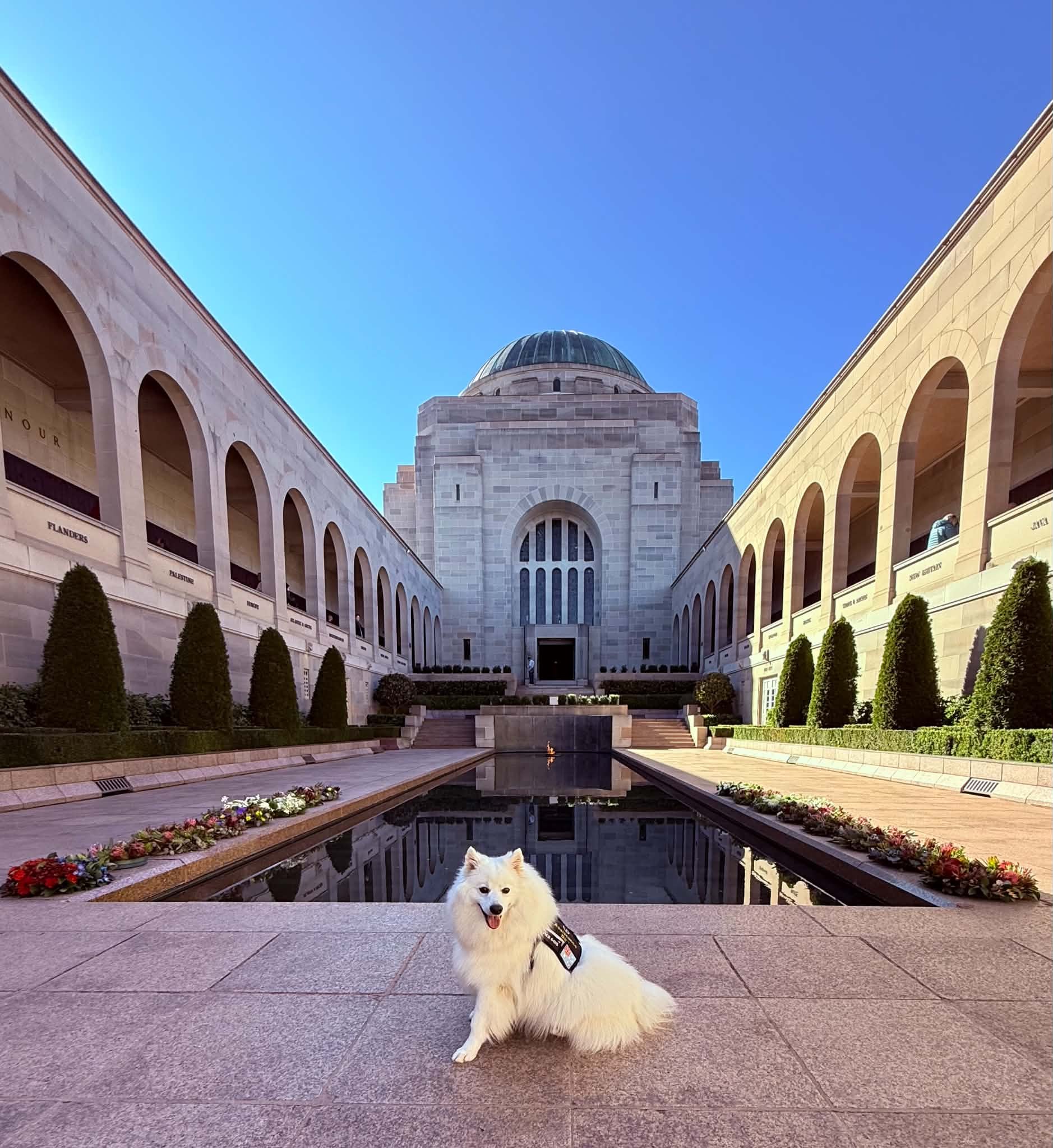
Service Dogs in the Public and Community
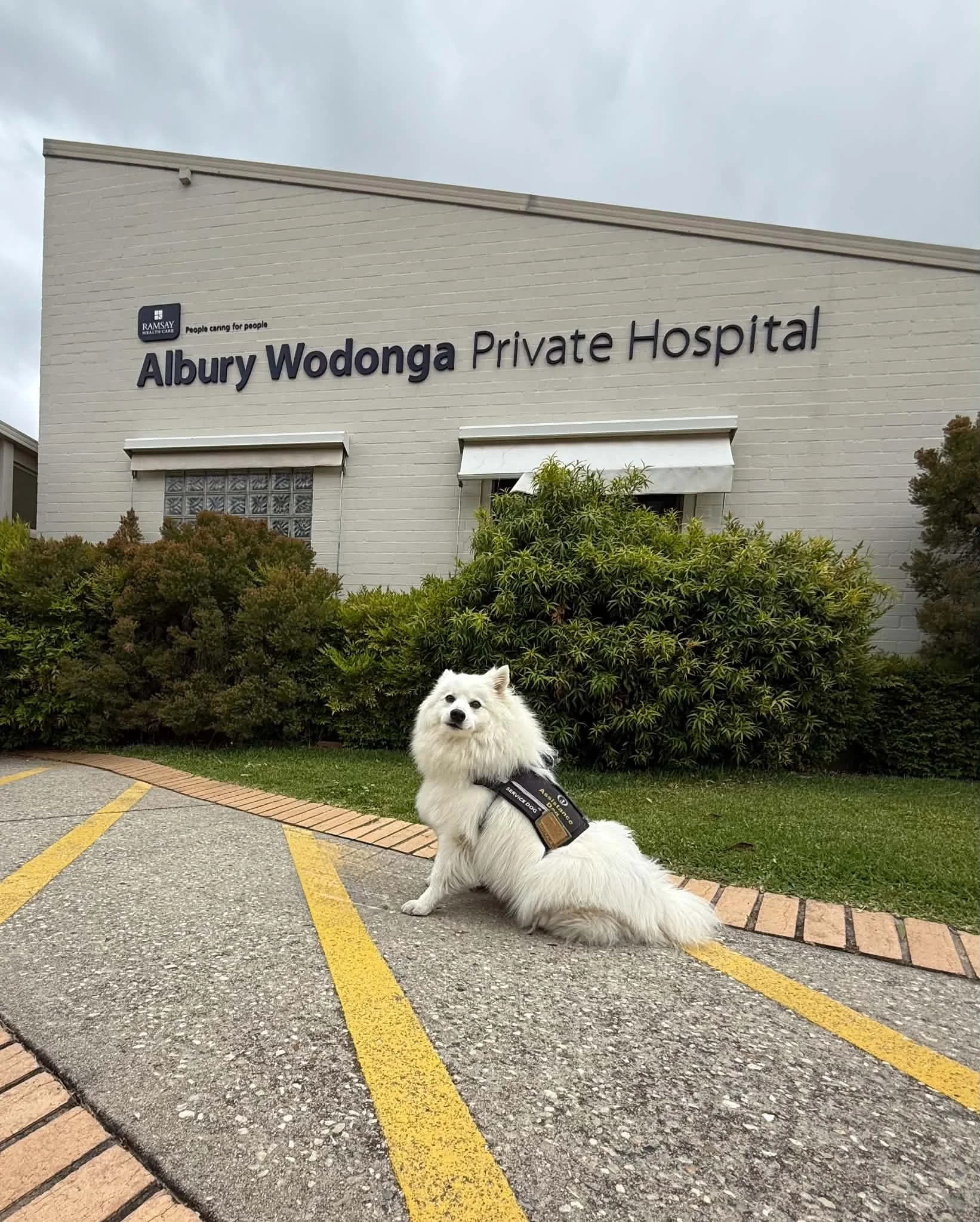
I would like to thank a Milestone Rehab client for sharing the following information on Service Dogs. This article is intended to help educate and raise awareness of the role of a Service Dog, and how we can respectfully respond to Service Dogs in the community.
Service Dogs come from all different backgrounds. Some are small, while others are larger breeds. They may look very different from one another, but there is one important thing they have in common, they are highly trained to perform tasks that a family pet cannot.
For many people, a Service Dog is far more than a companion. They provide practical assistance, support independence and can play an incredibly important role in helping their handler navigate everyday life.
From family pet to working dog
At home, a Service Dog can be just like any other dog. They can play, run around the house, get excited and enjoy being part of the family.
But once their working jacket goes on and they leave the house, something changes.
The dog becomes focused on their handler and the tasks they have been trained to perform. They are expected to remain calm, attentive and responsive, even when surrounded by the many distractions that come with being in public.
This level of behaviour doesn't happen by accident.
Service Dogs undergo extensive training that can include obedience, task-specific skills, remaining calm in public spaces and maintaining focus on their handler despite distractions.
And the training doesn't stop once they pass their Public Access Test (PAT).
Training is an ongoing process
Passing a Public Access Test is an important milestone, but it isn't the end of a Service Dog's training.
Ongoing training and reinforcement are essential to maintain the dog's skills and behaviour throughout their working life. Like any skill, these behaviours need to be regularly practised.
Public Access Test requirements can vary between states and territories and depending on the organisation or program involved. For example, Service Dogs supported through the Department of Veterans' Affairs are required to meet specific ongoing requirements, including annual PAT assessment.
Where applicable, a Service Dog may wear a jacket or other identifying equipment, along with identification demonstrating their accreditation or registration.
It's important to remember that identification can sometimes become detached during the day. If there is uncertainty about whether a dog is appropriately accredited, staff should follow their organisation's policies and seek clarification respectfully rather than making assumptions.
A Service Dog is working
One of the most important things members of the public can do is give a working Service Dog space.
When a Service Dog is wearing its working jacket or other working identification, it is generally working. Even though the dog may look calm, friendly and approachable, its focus needs to remain on its handler.
This means people should not:
Pat the dog without permission
Feed the dog
Call the dog over
Attempt to play with the dog
Distract the dog from its handler
The handler will usually let you know if interaction is appropriate.
With my own Service Dog, for example, I will ask him to sit and look at me. Once I have his full attention, I give him the command "Greet." This tells him that it is okay to interact with the person and receive a pat.
That small interaction is important because the handler, not the public, should decide when their Service Dog is available for social interaction.
Service Dogs in gyms and community environments
Service Dogs may accompany their handlers into many different community environments, including gyms, shopping centres and supermarkets.
In these environments, they are expected to remain under control and behave appropriately around people, equipment, food and other animals.
In the gym
A Service Dog may need to settle quietly in a designated safe area while their handler exercises. They should not interfere with gym equipment or other people using the facility.
However, there may be times when equipment is positioned near the dog.
Don't assume you can't use the equipment. Just ask the handler.
Something as simple as:
"Would you mind moving your dog so I can use this equipment?"
is usually all that is needed.
It isn't difficult for the handler to get their dog up and move them. What can be difficult is finding another piece of equipment that allows them to complete the exercise they need to do.
A little communication can make the gym a much more inclusive environment for everyone.
In supermarkets
In a supermarket, a well-trained Service Dog should remain close to their handler and avoid approaching other customers. They should also not interfere with shopping trolleys, products or food displays.
One of the best examples of a well-trained Service Dog is one that can walk through a supermarket, sit quietly and remain focused on their handler — even when walking past the butcher section!
There may be plenty of interesting smells and food around, but their job is to stay focused.
Caring for a Service Dog
Being a Service Dog doesn't mean the dog doesn't have the same needs as any other dog.
They still require appropriate exercise for their breed and individual needs, grooming, veterinary care, appropriate nutrition, adequate rest and ongoing behavioural training.
A Service Dog needs to be physically and mentally healthy to perform their role effectively.
It is also important to recognise that working doesn't mean working every minute of the day. Like people, dogs need time to rest, relax and simply be dogs.
A little respect goes a long way
For Service Dog handlers, going about everyday activities can sometimes involve navigating situations that other people don't have to think about.
A Service Dog provides an important level of support and independence, but they can only do their job effectively when they are able to concentrate on their handler.
The next time you see a Service Dog in your local gym, supermarket or community environment, remember:
They're not being unfriendly. They're working.
Give them space, follow the handler's lead and ask before interacting.
And if you're unsure about something, just ask the handler respectfully.
Small acts of understanding can make a significant difference in creating community environments where Service Dogs and their handlers can participate safely, confidently and comfortably.
Respect the dog. Respect the handler. Let them work.